
 Facebook
 X
X LinkedIn
 Forward
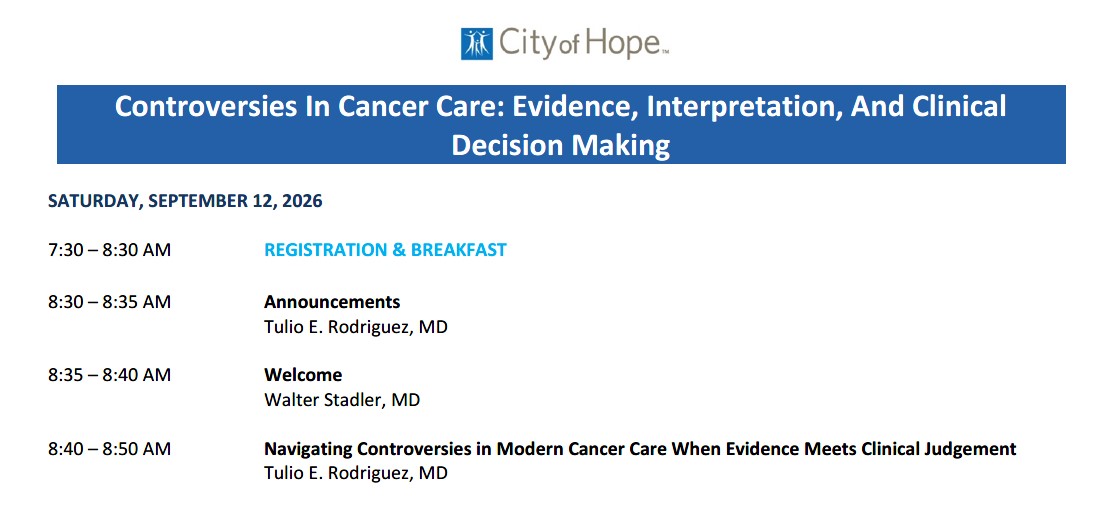
Controversies in Cancer Care: Evidence, Interpretation & Clinical Decision Making
This activity is necessary because oncology practice is rapidly evolving, with new evidence and therapies emerging faster that can be consistently integrated into routine care. A gap exists between available clinical trial data and its uniform interpretation and application in the real world setting. This is evident in areas of active controversy such as treatment intensification in mHSPC (metastatic hormone-sensitive prostate cancer), sequencing or CAR T-cell (Chimeric Antigen Receptor T-cell) and bispecific therapies, and management of high-risk hematologic malignancies. As a result, clinicians may differ in treatment selection and sequencing across similar patient scenarios. This activity addresses these gaps by synthesizing current evidence and expert perspectives to support more consistent, evidence-based decision-making.
Despite rapid advances in oncology, there remains a gap between emerging clinical evidence and its application in routine clinical practice. Significant variability persists in the management of conditions such as mHSPC, high-risk smoldering myeloma, aggressive lymphomas, and sAML (secondary acute myeloid leukemia), particularly regarding treatment intensification and optimal sequencing of therapies. Additionally, uncertainty remains regarding the integration of novel modalities such as CAR-T therapy, bispecific antibodies, and tumor-infiltrating lymphocyte approaches into earlier lines of treatment. Current practice is often influenced by institutional experience and evolving data, leading to inconsistent multidisciplinary decision-making across academic and community settings. Ideal practice would reflect timely, evidence-based, and risk-adapted treatment selection with standardized incorporation of novel therapies and multimodality approaches. This educational activity is designed to address these gaps by clarifying areas of controversy and aligning practice with the most current evidence to improve patient outcomes.
Target Audience
This activity is designed for advanced practice providers and physicians whose patients have a diagnosis of cancer; medical oncologists, hematologic oncologists, pulmonologists, and all other allied health care professionals interested in the subject matter.
Learning Objectives
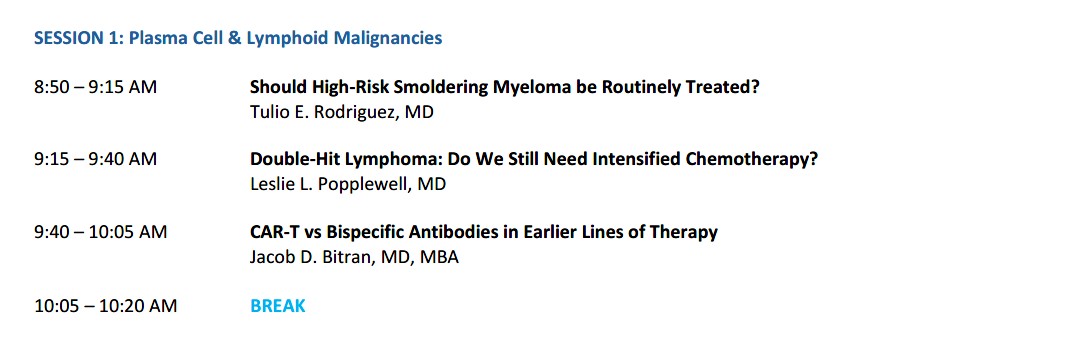
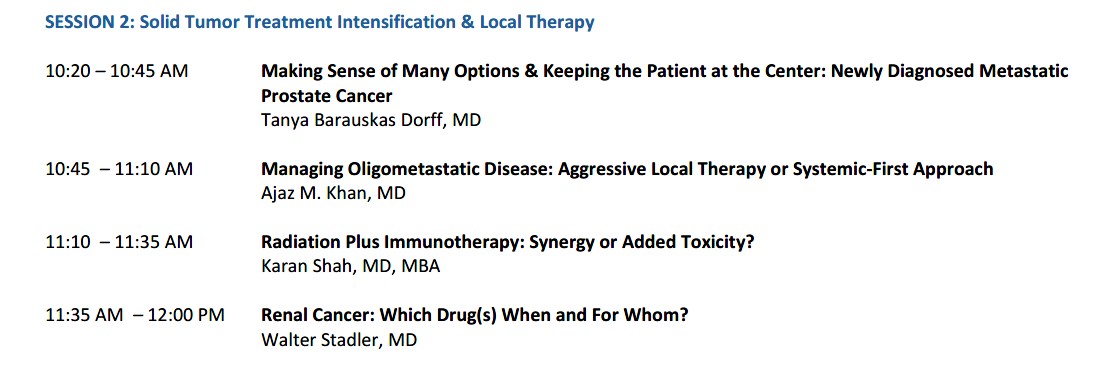
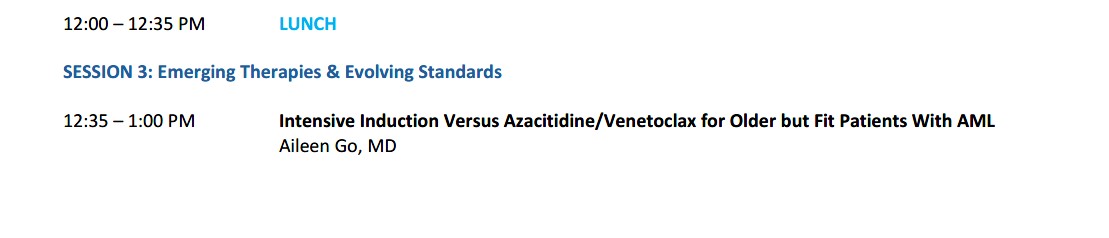
- Examine current clinical evidence and controversies guiding treatment decisions in metastatic hormone-sensitive prostate cancer, high-risk smoldering myeloma, lymphoma, acute myeloid leukemia, and solid tumors.
- Distinguish between emerging therapeutic approaches, including doublet versus triplet therapy, Chimeric Antigen Receptor T-cell versus bispecific antibodies, and intensified multimodality strategies.
- Assess the role of novel immunotherapies and cellular therapies in earlier lines of treatment across hematologic and solid malignancies.
- Integrate updated evidence and expert perspectives into individualized, multidisciplinary treatment planning for patients with complex cancers.
- Identify appropriate candidates for treatment intensification or de-escalation based on disease biology, risk stratification, and available data.
- Demonstrate improved clinical decision-making through application of evidence-based strategies to optimize patient outcomes in routine oncology practice.
- Discuss possible barriers and biases which may impact patient care (i.e., race, ethnicity, language, gender identity/orientation, age, socioeconomic status, attitudes, feelings, or other characteristics).
Activity summary
- 5.75 AMA PRA Category 1 Credit™City of Hope is accredited by the Accreditation Council for Continuing Medical Education (ACCME) to provide continuing medical education for physicians.
City of Hope designates this Controversies in Cancer Care: Evidence, Interpretation & Clinical Decision Making for a maximum of 5.75 AMA PRA Category 1 Credit™ requirements. Physicians should claim only the credit commensurate with the extent of their participation in the activity. - 5.75 Attendance
Please Note: Times on the schedule are in Central Time
Self-parking On-site in Front of Hotel or in the Gated Side Lot of Building: Free
Transportation to/from the airport is complimentary with hotel shuttle and within a three-mile radius of the hotel.
ACCREDITATION STATEMENT: City of Hope is accredited by the Accreditation Council for Continuing Medical Education (ACCME) to provide continuing medical education for physicians.
CREDIT DESIGNATION: City of Hope designates this live activity for a maximum of 5.75 AMA PRA Category 1 Credit™. Physicians should claim only the credit commensurate with the extent of their participation in the activity.
The following credit type(s) are being offered for this course:
• AMA PRA Category 1 Credit™ 5.75
The following may apply AMA PRA Category 1 Credit™ for license renewal:
Registered Nurses: Nurses may report up to 5.75 credit hours toward the continuing education requirements for license renewal by their state Board of Registered Nurses (BRN). AMA PRA Category 1 Credit™ may be noted on the license renewal application in lieu of a BRN provider number.
Physician Assistants: The National Commission on Certification of Physicians Assistants states that AMA PRA Category 1 Credit™ accredited courses are acceptable for CME requirements for recertification.
Available Credit
- 5.75 AMA PRA Category 1 Credit™City of Hope is accredited by the Accreditation Council for Continuing Medical Education (ACCME) to provide continuing medical education for physicians.
City of Hope designates this Controversies in Cancer Care: Evidence, Interpretation & Clinical Decision Making for a maximum of 5.75 AMA PRA Category 1 Credit™ requirements. Physicians should claim only the credit commensurate with the extent of their participation in the activity. - 5.75 Attendance
Price
Registration now closed (NO ONSITE REGISTRATIONS OR WALK-INS ALLOWED).
You must be logged in to your account to complete your registration.
Under "Registrant Type" dropdown (above), select your profession and click "Add to Cart". Follow the payment prompts.
You will receive an email confirmation once you are registered.
| Registrant Type | Registration |
|---|---|
| Physician | $0 |
| APP/ Nurse/Other Allied Health Care Provider | $0 |
| *Industry/Commercial Employee Attendee | Sold Out |
Registration includes meeting, meals, and CME Credit.
For questions, contact the Department of Continuing Medical Education at [email protected] or 626-218-5622
*Industry/Commercial Employee Attendee is defined as any individual employed by a for-profit, including biotech, financial and pharmaceutical.
Disclaimer: Attention Physicians by registering for this complimentary CME activity, you acknowledge that your participation will be reported to Health Endeavors as non-monetary compensation in accordance with applicable Centers for Medicare & Medicaid Services (CMS) regulations and Stark Law requirements. Following the conclusion of the activity, if you have exceeded your Annual Cap for non-monetary compensation, a registration fee of $25 will apply. If you have any questions regarding this policy, please contact [email protected].